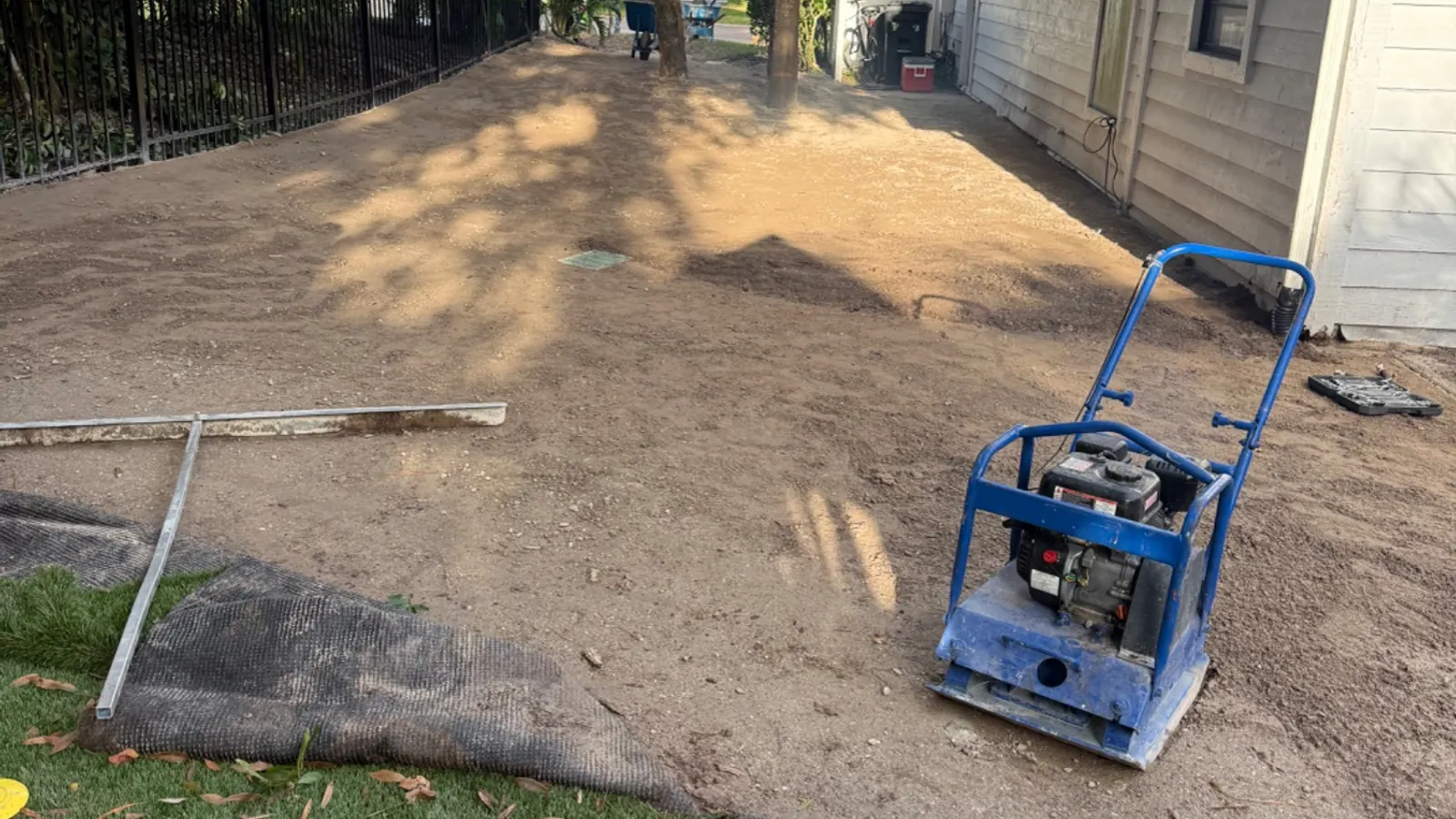
People are often surprised by how much of an artificial grass job happens before any grass shows up. The photo above is one of our own installs at exactly that stage: old lawn gone, ground graded, compactor on site.
Step one is removal. The existing sod and a few inches of soil come out. Laying turf over old grass is the most common shortcut in this trade, and it's why some lawns end up lumpy and smelling of rot — the grass underneath dies, settles unevenly and holds water.
Step two is grading. In Florida this matters more than anything else. The ground is shaped so that rain runs away from the house and toward a drain or the edge of the yard. If there's a drain box in the lawn, the base is graded to it.
Step three is the base. Crushed base material is spread, wetted and run over with a plate compactor until it's firm enough to walk on without leaving a mark. This is what keeps the lawn flat and lets water pass through.
Step four is weed barrier. A layer of fabric goes over the compacted base, pinned down and overlapped at the joins, so nothing grows up through the drainage holes in the turf.
Step five is the turf itself. Rolls are laid with the blades all running the same direction, cut to fit around trees, fences and downspouts, and seamed so the joins disappear. The edges are secured so they can't lift.
Finally the turf is brushed so the blades stand up, and infill is worked in where the product calls for it. Most residential yards take one to three days, and you can walk on the lawn as soon as we're done.
Thinking about turf for your yard? Call (813) 458-7668 for a free estimate anywhere in the Tampa area. New and referred customers get 15% off.