Choosing pavers usually starts with color and shape. The pattern they're laid in deserves just as much thought, because it affects both how the surface looks and how well it handles weight.
Running bond is the simplest: rows of pavers offset by half, like a brick wall. It's quick to lay and suits walkways and narrow spaces, where the lines lead the eye along the path.
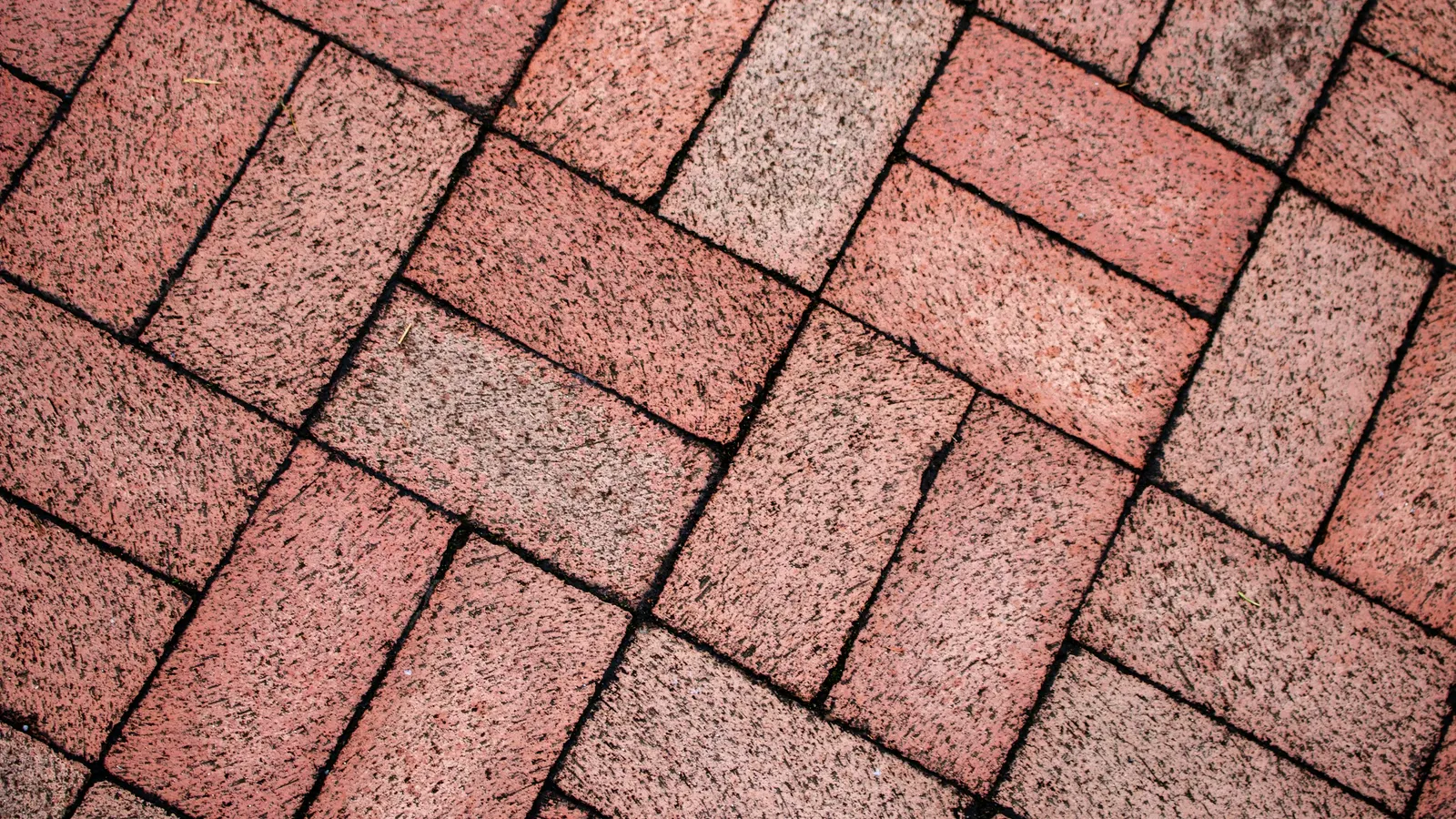
Basket weave sets pairs of pavers at right angles to each other, as in the photo above. It has a classic, relaxed look that works well on patios and courtyards.
Herringbone lays the pavers in a zigzag at 45 or 90 degrees. Because every paver is locked against its neighbors in two directions, it's the strongest pattern and the one we recommend for driveways, where tires turn and brake.
Whatever the pattern, a contrasting border — a single row of pavers around the outside, often in a darker color — frames the field and gives the edge a finished look.
Now the part that matters most. Pavers don't sink because of the pattern; they sink because of the base. A proper job means excavating to the right depth, building the base in compacted layers, screeding an even bed of sand and installing edge restraint so the pavers can't creep outward. Sand swept into the joints and compacted locks everything together.
When that's done right, a paver surface handles Florida's rain and heat for years, and if a section ever does settle it can be lifted and re-laid — something you can't do with a cracked concrete slab.
Planning a patio, driveway, walkway or pool deck? Call (813) 458-7668 for a free estimate in Tampa and the surrounding area.