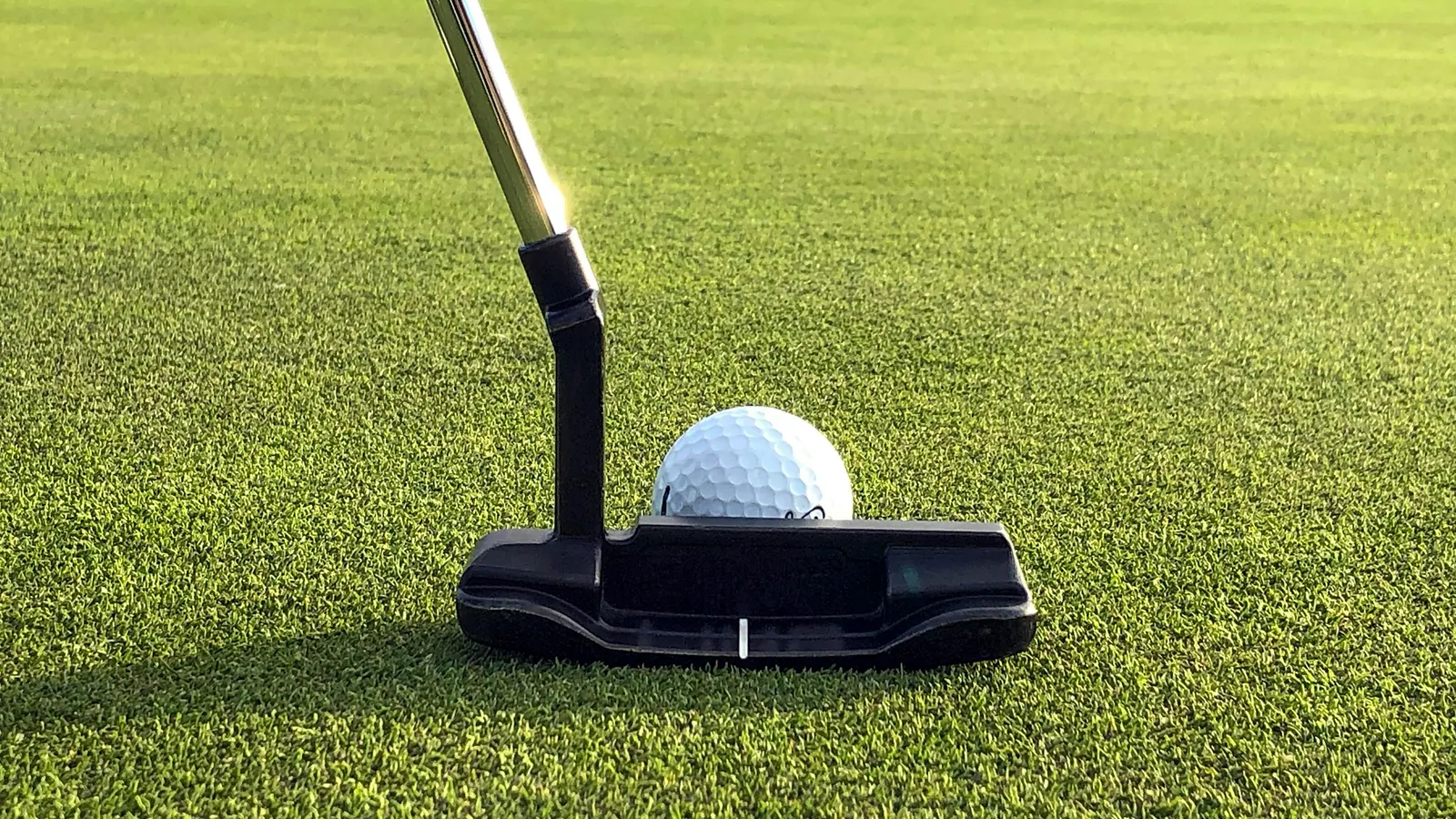
A backyard putting green is one of the few yard projects you'll use every week. A little planning up front makes the difference between a green that's fun for a month and one that actually improves your putting.
Start with location. Pick a spot you can see from the house and reach easily — greens tucked behind a shed don't get used. Shade is fine; unlike real bentgrass or Bermuda, synthetic putting turf doesn't care about sun.
Next, size. A small green of around 150 to 250 square feet is enough for putts of 10 to 15 feet and two or three cups. With more room you can add longer putts and a fringe wide enough to chip from.
Then the cups. More cups mean more variety from the same surface. Spread them so that each one gives you a different length and a different break, rather than lining them up in a row.
Breaks are built into the base, not the turf. Subtle slopes of one to two percent give you realistic left-to-right and right-to-left putts. Too much slope and the ball won't stop near the hole, so gentle is better.
Speed comes from the turf and the infill. Short, dense putting turf is laid over a very firm, smooth base, then infill is worked in and the surface is rolled. More infill and rolling make it faster. Most home greens are set up at a medium pace that suits everyday practice.
Finally, think about what surrounds it. A band of longer fringe turf frames the green, and a paver border or a small seating area beside it makes it part of the yard rather than an add-on.
We install putting greens for backyards and for golf-course and practice areas. Call (813) 458-7668 for a free estimate.